
Network Predictive Analytics: Transforming Network Operations from Reactive to Proactive
Prerit Bhalani
Feb 24, 2026
Summary: Network environments have become harder to manage than they used to be, and relying on alerts alone often means reacting late. Because of that, many teams are experimenting with network predictive analytics to understand patterns earlier and reduce unexpected disruptions. In some cases, it helps stabilize performance; in others, it simply makes unusual behavior easier to spot before it spreads. When supported by dependable data and systems that actually connect well, the approach tends to improve day-to-day consistency. Over time, that’s where the practical value of predictive analytics in network operations becomes visible.
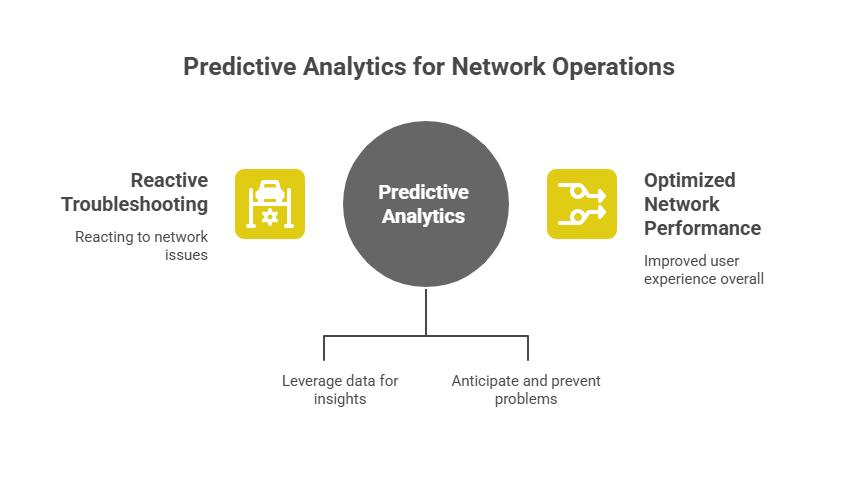
Until now, most network teams have been following a reactive approach. The process is repetitive: investigate, isolate, and resolve. In centralized, relatively predictable environments, this approach worked well.
However, enterprise networks today span hybrid cloud environments, SaaS platforms, SD-WAN frameworks, and a growing list of external integrations. Which gives a clear indication that the stability is no longer an option. System dependencies stretch across layers that are not always easy to see in one place. Waiting until something breaks before responding adds risk that organizations can no longer afford.
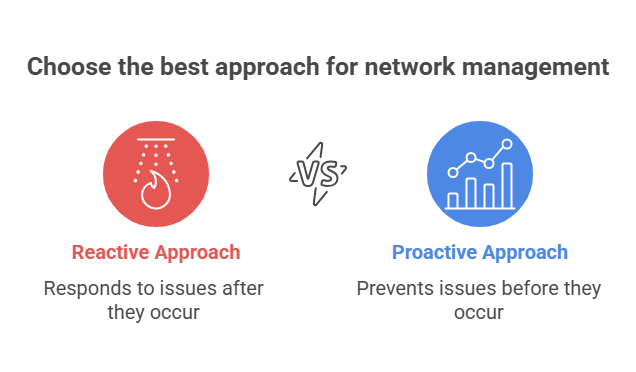
This is why discussions around proactive vs reactive network management are becoming more practical than theoretical. Leaders are not just looking to respond faster; they want earlier clarity. Network predictive analytics enables spotting patterns before they turn into incidents, shifting the focus from constant recovery to better preparedness.
What Is Predictive Analytics in Network Operations?
Predictive analytics in network operations refers to the use of machine learning and advanced data modeling to forecast potential network issues before they occur.
Rather than relying solely on static thresholds, predictive systems analyze:
- Historical incident data
- Real-time telemetry
- Traffic behavior trends
- Device performance patterns
- Configuration changes
- Log correlations
By identifying patterns and anomalies, predictive models estimate the likelihood of future incidents. This directly answers a common leadership concern: how does predictive analytics prevent network outages? It does so by identifying degradation trends, anomaly clusters, and risk patterns early enough for teams to take preventive action.
In practical terms, this is AI in network operations focused on foresight rather than reaction, turning operational data into decision intelligence through network predictive analytics.
Key Benefits of Predictive Analytics in Network Operations

In mature implementations, enterprises often see:
- 30–40% reduction in repeat incidents
- 25–35% faster resolution (MTTR improvement)
- 20–30% better SLA adherence
- Reduced L2/L3 escalation workload
These measurable outcomes translate into improved reliability, lower operational costs, and higher engineering productivity.
Industry-Specific Use Cases
The value of network predictive analytics becomes clear when tied to real business impact across industries.
- Retail
Enables proactive network monitoring to forecast WAN congestion before peak shopping periods, ensuring uninterrupted checkout and digital experiences. - BFSI
Strengthens predictive analytics for network threats by identifying latency anomalies that could impact digital payments and trading systems. - Healthcare
Enhances network anomaly detection to prevent outages in patient monitoring systems and connected clinical environments. - Hi-Tech & SaaS
Supports network performance optimization by forecasting capacity needs and preventing downtime during rapid growth.
How to Implement Predictive Analytics in Network Operations
Implementing predictive analytics in network operations requires a strategic approach. Here are some key considerations:
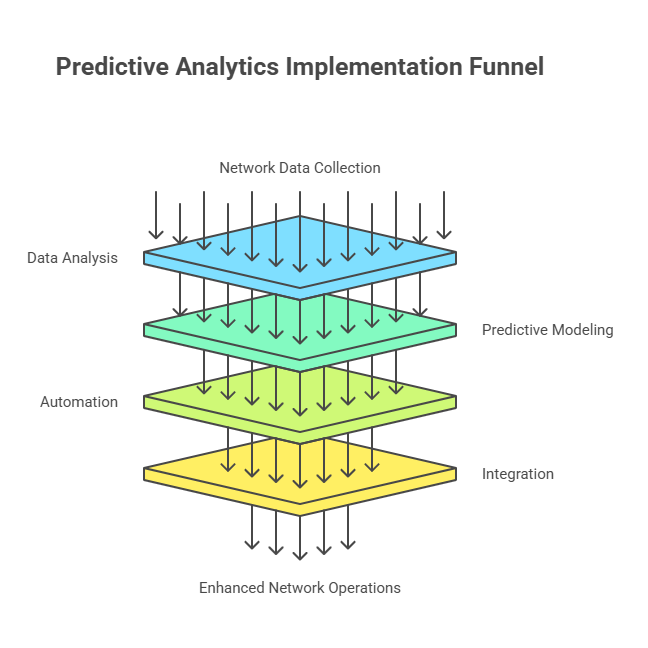
- Data Collection: Collect all the network data from devices, servers, applications, and supporting systems to create a unified operational view.
- Data Analysis: Apply analytical techniques, such as machine learning, where appropriate, to discover the patterns, trends, and abnormal behavior within that data.
- Predictive Modeling: Build models that use these historical and real-time insights to anticipate future network conditions and flag emerging risks.
- Automation: Enable automated monitoring and response so insights translate into timely corrective actions.
- Integration: Ensure predictive capabilities are connected to existing network management tools and operational workflows to support proactive decision-making.
Key Challenges and Considerations of Predictive Analytics in Network Operations
While powerful, implementation comes with considerations.
Organizations must evaluate what are the key challenges of predictive analytics in network operations, including:
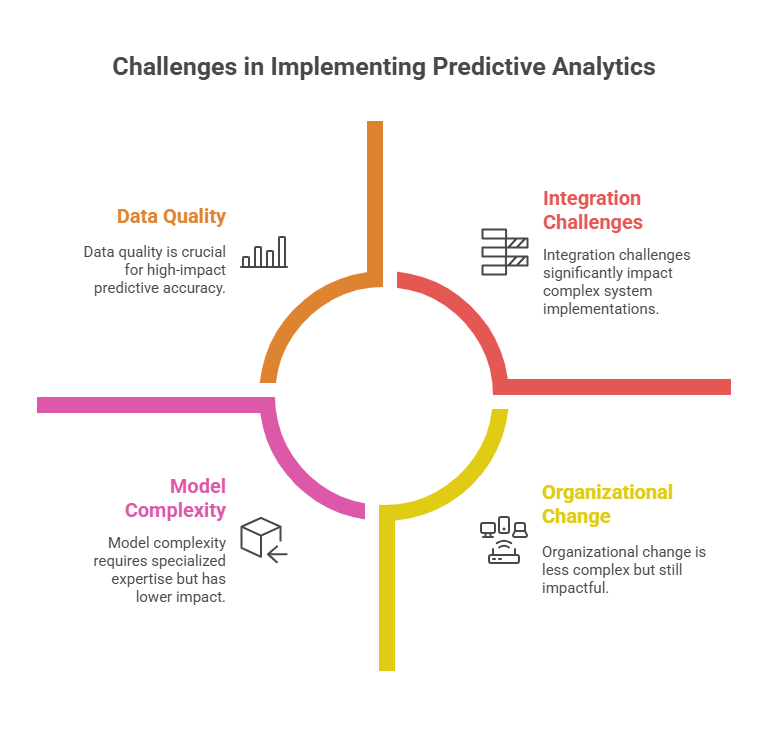
Predictive analytics brings clear advantages, but it is not without hurdles. Poor or inconsistent data can limit accuracy, and large volumes of telemetry demand capable infrastructure. Models require ongoing expertise to stay relevant, and fitting them into existing systems often takes more effort than expected. In many cases, teams also need to adjust how they work to make a predictive approach effective.
Proactive v/s Reactive Network Management
The major difference between the two is that reactive management resolves incidents after impact, while proactive management prevents incidents before impact.
Network predictive analytics bridges this gap by converting telemetry into foresight. In distributed, cloud-driven enterprises, proactive vs reactive network management is no longer theoretical; proactive intelligence is foundational to resilience and cost control.
Why This Matters to NOC Leaders and CIOs
For network operations leaders, NOC managers, IT infrastructure heads, and enterprise architects, the discussion around predictive analytics usually comes down to practical impact. Does it actually help keep systems stable? Does it make recovery faster? Does it prevent teams from constantly chasing alerts?
In certain environments, network performance optimization contributes to improving network reliability with AI; in others, it simply makes network anomaly detection clearer over time. Network performance optimization tends to follow gradually rather than all at once. How much difference it makes usually depends on how the operation was set up in the first place.
How Jade Global Enables Intelligent Network Operations
Predictive analytics delivers value only when built on strong operational foundations. Without clean observability and structured workflows, AI in network operations cannot scale effectively.
Jade Global helps enterprises transition from reactive troubleshooting to intelligent operations through AI-Driven NOC Services, Network Observability expertise, and Proactive Operations & Assurance frameworks.
By assessing NOC maturity, modernizing monitoring, and embedding proactive network monitoring into workflows, Jade operationalizes network predictive analytics securely and measurably. Rather than layering AI onto fragmented systems, Jade strengthens the data and governance foundations that make predictive models effective.
The result is measurable — improved uptime, enhanced network performance optimization, reduced MTTR, and scalable resilience.
Conclusion:
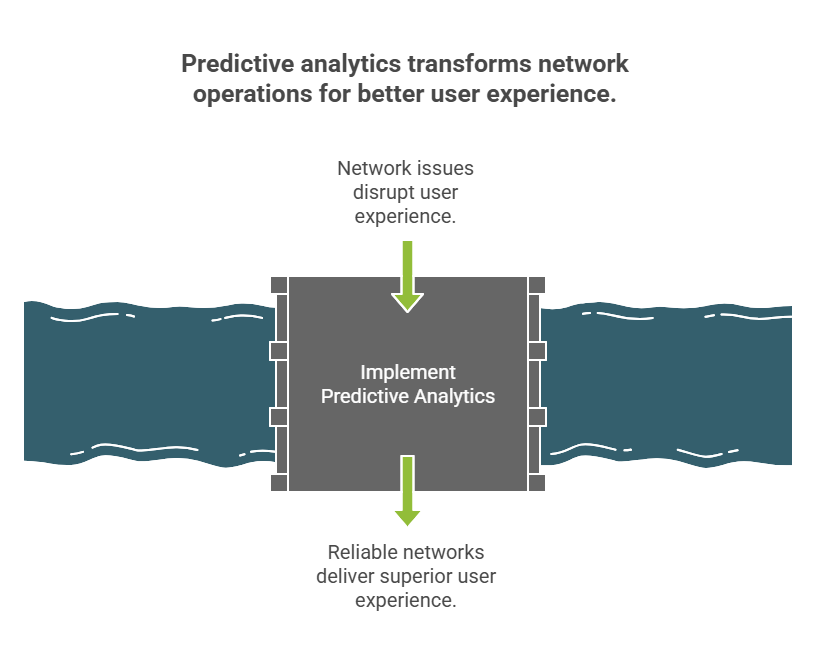
Predictive analytics is transforming network operations by shifting teams from reactive troubleshooting to proactive control. With the right data foundation and governance, network predictive analytics helps prevent outages, optimize performance, strengthen network anomaly detection, and improve overall reliability.
As enterprises evaluate the benefits of predictive analytics in network operations, proactive intelligence is no longer optional — it is essential. Jade Global helps organizations assess readiness, modernize observability, and implement AI in network operations responsibly and securely.
Ready to move from reactive to predictive? Connect with Jade Global for a Network & NOC Readiness Assessment and build future-ready network operations.
Subscribe to our Technology Insights





About the Author

How Can We Help You?
Related Posts